
Canada Research Chairs (Tier 2)

Dr. Tim Green
Dr. Tim Green is an internationally recognized expert in aquaculture, with a strong emphasis on aquatic animal health and immunology and Canada Research Chair in Shellfish Health and Genetics.
Dr. Green has expanded understanding of invertebrate immunology by identifying new immune pathways in oysters. He is currently examining the response of the Pacific oyster to two ocean acidification and Vibrio bacteria. By studying the genetic and epigenetic mechanisms of shellfish adaption to these stressors, implementation of a selective-breeding program to future-proof the Canadian shellfish industry against these challenges is anticipated.
Office: Building 473 Room 224
Phone: 250.740.6132, Local 6132
Email: Timothy.Green@viu.ca
Dr. Amanda Wager
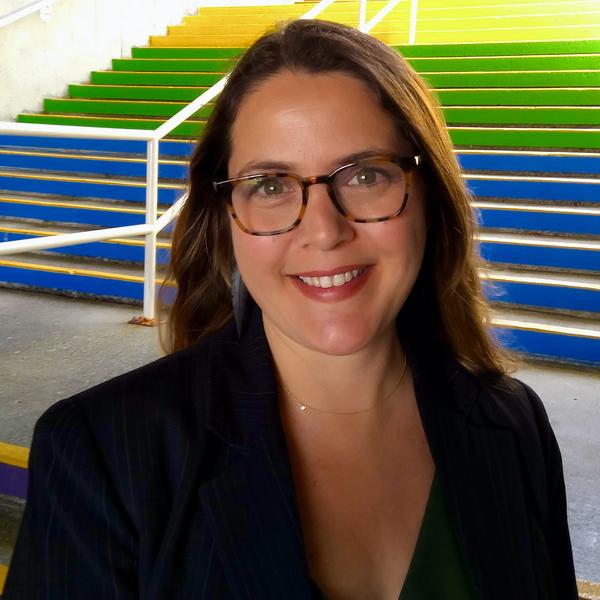
Dr. Wager, the Canada Research Chair in Community-Engaged Research, is an interdisciplinary scholar with internationally recognized expertise in community research in education.
Focusing on literacies, languages, and the arts with local youth, families, and communities, Amanda explores arts-based literacies with the objective of stimulating culturally responsive learning. Youth-led public art projects that involve participatory visual methodologies such as theatre, mural painting, spoken word poetry, hip-hop music, and digital story-telling are an integral part of her innovative research.
The Canada Research Chair program has supported the creation of the arc: A Centre for Art, Research & Community. Core to community-engaged research is relationship building. This Centre was created as a method to increase youth leadership and capacity development that facilitates cross-cultural relationships with local Indigenous, non-Indigenous and international communities. It is for and run by youth—including VIU undergraduate and graduate students. Engaging with crucial ethical and methodological questions surrounding community research, the Centre contributes to a more nuanced understanding of what it means to do research with and among young people employing creative practices to explore local issues, to make meaning of challenging concepts, and to provoke social change.
Phone: 250.618.1505
Email: Amanda.Wager@viu.ca
Dr. Whitney Wood
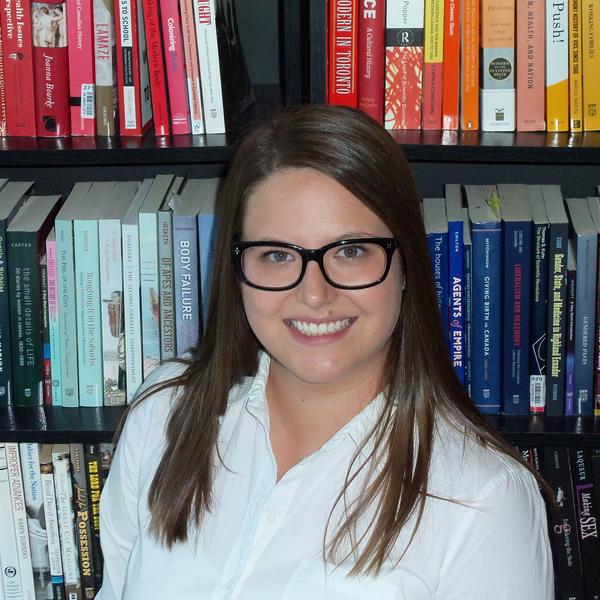
Dr. Whitney Wood is a historian of medicine, health, and the gendered body in modern Canada and Canada Research Chair in the Historical Dimensions of Women's Health.
Focused on the history of women's pain in modern Canada, Dr. Wood's research explores the broad history of attitudes towards and experiences of pain during childbirth. Dr. Wood's research examines twentieth-century birth cultures with a specific focus on Vancouver Island, builds collaborations in the study of gendered medical violence, and explores the history of women's pain across the life cycle. Building on her previous work at the intersections of the history of health and medicine and women's and gender history, Dr. Wood's work as CRC in the Historical Dimensions of Women's Health centres around the ultimate goal of seeking to improve women's encounters with the Canadian health care system.
Office: Building 210 Room 320
Phone: 250.740.6538
Email: Whitney.Wood@viu.ca
Twitter: @whitneylwood
BC Regional Innovation Chairs
Danielle Alphonse
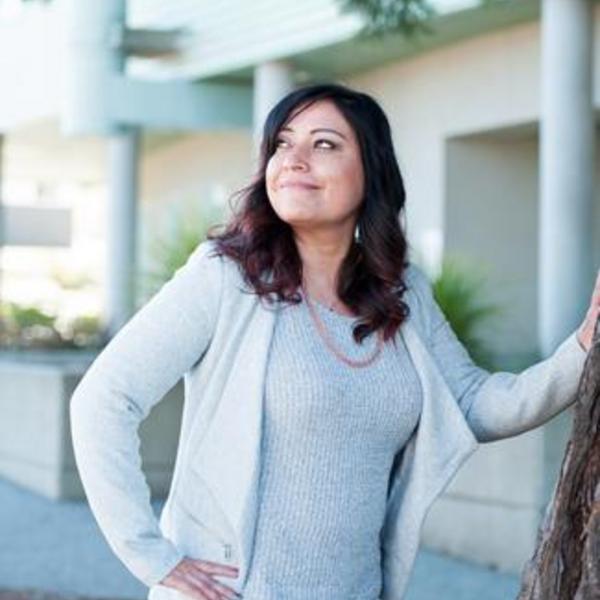
Danielle (Qwul'stun'a'wat) Alphonse is the BCRIC in Aboriginal Early Childhood Education and focusses on strengthening educational preparation and professional development of ECD practitioners to support best practices in AECD programs and services.
My name is Danielle Alphonse. I also carry the traditional name Qwul'stun'a'wat from my late grandmother, Philomena Alphonse. Acknowledging my family line, my late grandparents, Philomena Alphonse and Dennis Alphonse, on my mother's side, and my dad's side, Olwen Mc Neil and the late Bill Mc Neil. On my other dad's side, the late Donna Galloway and Charles Galloway. My parents, Lucy Galloway, Doug Regan and David Galloway have shaped me into the person I am today. I am the oldest of three sisters and the oldest grandchild in my family. I am proud of my diverse heritage, which includes Cowichan on my mother's side and Kahnawake, Welsh, Irish and Scottish on my father's side.
For the past decade, I have served as the BC Regional Innovation Chair for Aboriginal Early Childhood Development at VIU. This role has allowed me to contribute significantly to the field and has given me the opportunity to teach in the Early Childhood Education and Care program. This is a responsibility I hold dear.
My educational journey has been focused on Early Childhood Education, Child and Youth Care, and Education. These areas of study have equipped me with a comprehensive understanding of the field and the skills necessary to make a meaningful impact with and for Indigenous communities.
Office: Building 180, Room 421
Email: Danielle.Alphonse@viu.ca
Dr. Farhad Moghimehfar
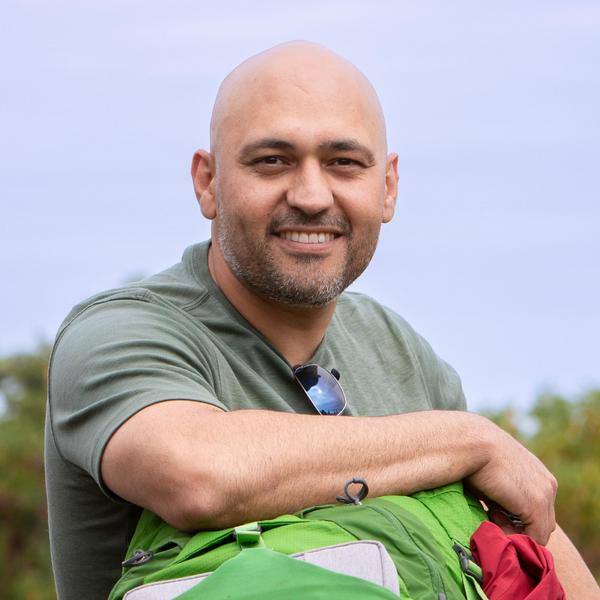
A distinguished researcher in the field of Tourism and Sustainable Rural Development, Dr. Moghimehfar is the BCRIC in Tourism and Sustainable Rural Development.
Dr. Moghimehfar brings a wealth of expertise to his role. Prior to joining VIU in 2018, he served as a post-doctoral researcher at the University of Alberta and as an Assistant Professor at the University of Northern British Columbia. His research focuses on rural and nature-based tourism with a particular emphasis on community tourism, resilience, and studies of human behaviour. Farhad's interdisciplinary approach extends to collaborations with researchers in physical education, community planning, and environmental psychology. As an Associate Editor for the Journal of Ecotourism and a contributor to leading journals, Farhad is actively engaged in shaping the discourse in his field.
Teaching in the Department of Recreation and Tourism Management at the Faculty of Management at VIU, Farhad imparts his extensive knowledge to the next generation of professionals in the field. His commitment to education is complemented by his practical experience in providing community and professional advisory services related to tourism, park planning, research design, and advanced data analysis in Canada and internationally.
In his role as the BC Regional Innovation Chair, Dr. Moghimehfar is leading a comprehensive research program aimed at enhancing the resilience of rural tourism communities in British Columbia. This program will undertake multiple projects to explore the adaptive capacity of various rural tourism communities and implement strategies to bolster their resilience in the face of changing dynamics and challenges.
The research program will be characterized by its collaborative nature, involving stakeholders and utilizing a diverse range of quantitative and qualitative research methods. Projects will incorporate policy reviews, secondary data analysis, and big data analysis to comprehensively understand the adaptive capacity of rural communities. The ultimate goal of these projects is to generate actionable insights that will inform the development of recommendations and guidelines for enhancing community resilience and adaptive capacity through sustainable tourism development in rural Canada.
Building / Room: 250 / 360
Email: Farhad.Moghimehfar@viu.ca
Michael Smith Health Research BC Scholars
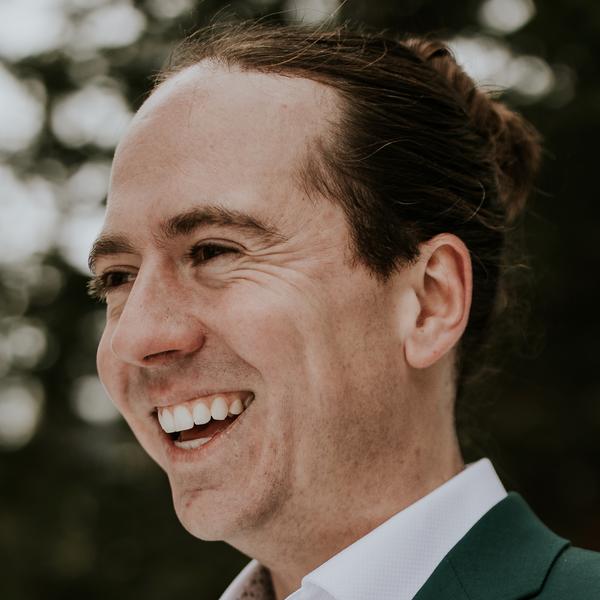
Dr. Mike Asmussen
A professor in the Faculty of Science and Tech (Kinesiology) at Vancouver Island University, Dr. Mike Asmussen leads the Foot-Ankle Stability (FASt) Lab. His Research is funded by a Michael Smith Health Research BC Scholar Award and NSERC Discovery Grant (2021-2026).
Dr. Asmussen's research program focusses on how the foot and ankle are essential for humans to walk and run and to understand the structure, function, and neural control of the foot and ankle during locomotion in healthy, aging, injured, and diseased states. The research end goal is to translate research outcomes into innovative healthcare solutions aimed at assessing and improving stabilization of the foot and ankle and so maintain a person’s ability to safely walk and run throughout their lifecycle.
Although walking and running may seem like simple movements, the execution of these tasks is complex – and, for some, difficult – considering the coordination required across the nervous, muscular, and skeletal systems. When people experience a musculoskeletal or neural impairment that affects the foot and ankle or as part of the aging process, their ability to walk or run often becomes compromised. Dr. Asmussen’s research seeks to understand the structure, function, and neural control of the foot and ankle during locomotion in healthy, aging, injured, and diseased states. Understanding the foot and ankle’s role in locomotion is complicated by the fact that these structures are incredibly complex (e.g., 26 bones, 33 joints, 100+ ligaments, muscles, tendons)! To address this complexity, Dr. Asmussen uses a combination of biomechanical tools, physiological measures, computational modelling, and simulation techniques to answer his research questions. The end goal of this research program is to translate research outcomes into innovative healthcare solutions aimed at assessing and improving stabilization of the foot and ankle and hence, a person’s ability to safely walk and run throughout their lifecycle.
Email: michael.asmussen@viu.ca
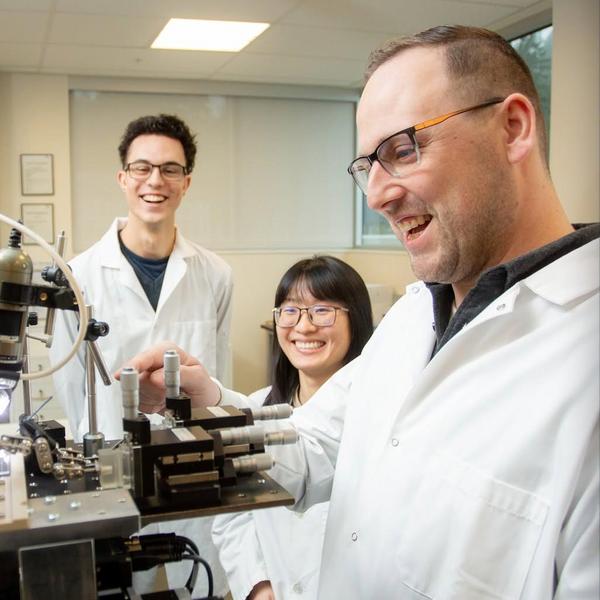
Dr. Kyle Duncan
Dr. Duncan is the recipient of a Michael Smith Health Research BC Scholar award and is examining profiling tissue metabolism at near-cellular scales with ambient ionization mass spectrometry imaging.
The overall goal of Kyle’s research program is to uncover contextual distributions of biomolecules in complex tissues to more clearly show molecular mechanisms of disease. By blending analytical chemistry, engineering, and biochemistry, Kyle’s research program aims to design, build, develop, and apply custom ambient mass spectrometry imaging instrumentation. This technology will enable visualization of biomolecules directly in tissue and and allow further study of that distribution. New ways to measure small molecule metabolites in biological samples and use mass spectrometry imaging to map the distributions of metabolites directly in tissue could help discover new treatment options for cancer.
Open-access software tools to support the exploration of large mass spectrometry imaging datasets are also being developed by the group.
Other areas of Kyle's expertise include
- Mass spectrometry
- Mass spectrometry imaging
- Metabolomics
- Lipidomics
- Bioanalysis
- Small molecule screening
Email: Kyle.Duncan@viu.ca
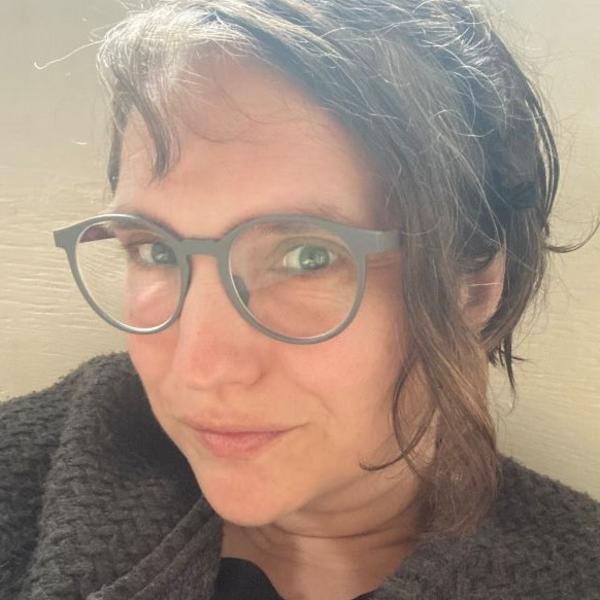
Dr. Sharon Karsten
In 2019, Karsten worked with a team to create the Walk With Me project - a research and social change initiative centred on the toxic drug poisoning crisis in small communities. She is honoured to continue this work through the Michael Smith Health Research BC Scholar Program.
Sharon Karsten, PhD, is honoured to live, work and play on the traditional territory of the K'ómoks First Nation, and to have been welcomed into territories throughout Vancouver Island and beyond, including Kwakwaka'wakw, Coast Salish and Nuu-Chah-Nulth territories. Karsten is a cultural and community development researcher/practitioner. She completed her PhD in Communications through Simon Fraser University’s School of Communication (2019) – focusing on cultural policy, cultural mapping and cultural development. She then completed a Post-Doctoral Fellowship at Vancouver Island University (2022), where she examined change-making and social innovation potentials within arts organizations throughout Canada. Karsten has played leadership roles in non-profit arts-contexts, most recently having served as Executive Director for the Comox Valley Art Gallery (2008 - 2019).
In 2019, Karsten worked with a team to create the Walk With Me project - a research and social change initiative centred on the toxic drug poisoning crisis in small communities. She is honoured to continue this work through the Michael Smith Health Research BC Scholar Program, and through an ongoing collaboration with Vancouver Island University, Island Health, AVI Health and Community Services, the Comox Valley Art Gallery, and others.
She is honoured, as well, to work with the Walk With Me team; with Elders/Knowledge Keepers, Peers, and with many who have shared their stories and insights for change. Her work over the next 5 years involves story-sharing with Peers, Family members, Elders/Knowledge Keepers and Health System Workers within Island Health and Community settings; through this project, she hopes to create a learning health system model that foregrounds the voices and lived experiences of Peers, and that creates new ways forward for those at the heart of the drug poisoning crisis towards a reduction in mortality and improvements in quality of life. Karsten is grateful to those with whom she has walked on this journey, and to those whose memory lies at the heart of this work.
For more information about Karsten's research program, please visit: www.walkwithme.ca
Email: sharon.karsten@viu.ca
Michael Smith Health Research BC Investigators

Dr. Caroline Variath
Caroline recieved the 2025 Michael Smith Health Research BC Health Professional Investigator Award for Building Community Capacity to support her ongoing research into Patients and Families Considering and Receiving Medical Assistance in Dying (MAiD).
Caroline joined Vancouver Island University's Department of Nursing in 2022 and is a nurse coordinator with the Medical Assistance in Dying (MAiD) team in Island Health’s Palliative and End-of-Life Care Program. Her clinical and pedagogical expertise stems from over 15 years of acute and critical care nursing and over eight years of teaching experiences. She has lived and worked in India, Zimbabwe, Australia, and Canada, which gives her unique perspectives on global inequities and diverse human needs. Her personal, clinical, and academic experiences influence her teaching philosophy and research approaches.
She completed a PhD in nursing with a specialization in bioethics at the University of Toronto. Her research primarily focuses on end-of-life care and healthcare ethics. Through her teaching and research work, she hopes to change perceptions of death as a failure, increase awareness about the death and dying processes, and improve end-of-life care.
Email Caroline.Variath@viu.ca
Jarislowsky Chair in Trust and Political Leadership
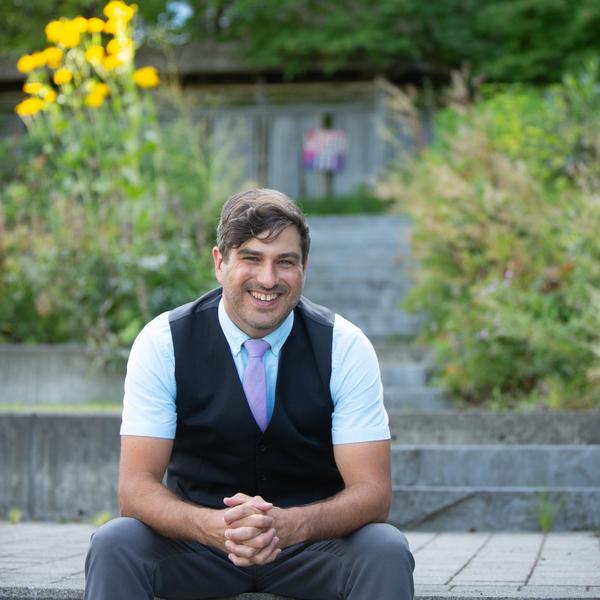
Dr. Michael K MacKenzie
Dr. MacKenzie is VIU's inaugural Jarislowsky Chair in Trust and Political Leadership and is a professor of Political Studies in the Faculty of Social Sciences.
Dr. MacKenzie has spent the past 20 years studying and writing about democracy. He holds a PhD in political science from the University of British Columbia (2013), a master’s in political science and social statistics from McGill University (2006), and a bachelor of arts in politics from the University of Winnipeg (2004). In 2006-07 he worked as a policy analyst and facilitator with the Ontario Citizens’ Assembly on Electoral Reform. He was a Democracy Fellow and post-doctoral researcher at the Ash Center for Democratic Governance and Innovation at the Harvard Kennedy School (2013-15) before joining the Department of Political Science at the University of Pittsburgh as an Assistant Professor and later an Associate Professor (2015-23).
As VIU's inaugural Jarislowsky Chair in Trust and Political Leadership he will work with four other Jarislowsky Chairs in Trust and Political Leadership at universities in Nova Scotia, Quebec, Ontario, and Alberta. The long-term goal of this network of five endowed chairs is to develop educational programming and training for future leaders. The programming will focus on trust and ethical practice in governance and political leadership.
“I hope to help make the network of Jarislowsky Chairs in Trust and Political Leadership a prominent and valuable resource in public discussions about democracy in Canada and elsewhere,” said MacKenzie. “Jarislowsky’s idea to create a national network of Chairs is itself an innovative bit of leadership. Most endowed university chairs are not formally networked with other research chairs. This network will provide future leaders with opportunities to learn about different aspects of our vast and diverse country.”
“I plan to leverage the prominence and resources associated with this position to make substantive, positive contributions to how democracy is understood and practiced in Canada,” said MacKenzie. “Over time, I have come to think that political knowledge, deliberation, trust, effective leadership and robust democratic institutions are needed if we are going to make our shared futures together in intentional ways.”
Dr. MacKenzie’s research interests include democratic theory and practice, intergenerational relations, deliberation, Canadian politics, environmental policy, political representation, institutional design, and public engagement.
Recent publications
Books
MacKenzie, M. K., Setälä, M., & Kyllönen, S. (Eds.) (2023). Democracy and the Future: Future-Regarding Governance in Democratic Systems. Edinburgh University Press.
MacKenzie, M. K. (2021). Future Publics: Democracy, Deliberation, and Future-Regarding Collective Action. Oxford University Press.
Chapters and articles
MacKenzie, M. K. (2025). Democratic Leadership Revisited. Politics and Governance, 13.
MacKenzie, M. K., & Moore, A. (2024). As-if trust. Critical Review of International Social and Political Philosophy, 1–22.
MacKenzie, M. K. (2023) ‘Representation and Citizens’ Assemblies’ In Reuchamps, M., Vrydagh, J. & Welp, Y. (2023) De Gruyter Handbook on Citizens’ Assemblies. De Gruyter Publishing.
Kyllönen, S., MacKenzie, M.K. & Setälä, M. (2023). ‘Introduction: The Challenges and Possibilities of Future-Regarding Governance.’ In MacKenzie, M. K., Setälä, M., & Kyllönen, S. (Eds.) (2023). Democracy and the Future: Future-Regarding Governance in Democratic Systems. Edinburgh University Press.
MacKenzie, M. K. (2023). ‘Future-Regarding Democratic Leadership.’ In MacKenzie, M. K., Setälä, M., & Kyllönen, S. (Eds.) (2023). Democracy and the Future: Future-Regarding Governance in Democratic Systems. Edinburgh University Press.
MacKenzie, M. K., Kyllönen, S. & Setälä, M. (2023). ‘Conclusion: Future-Regarding Governance – Four Tensions and a Research Agenda.’ In MacKenzie, M. K., Setälä, M., & Kyllönen, S. (Eds.) (2023). Democracy and the Future: Future-Regarding Governance in Democratic Systems. Edinburgh University Press.
Fournier-Tombs, E. & MacKenzie, M. K. ( 2021). ‘Big Data and Democratic Speech: Predicting Deliberative Quality using Machine Learning Techniques.’ Methodological Innovations. 14(2): 1-15.
MacKenzie, M. K., & Caluwaerts, D. (2021). 'Paying for the Future: Deliberation and Support for Climate Action Policies.' Journal of Environmental Policy & Planning. 23(3): 317-331.
MacKenzie, M. K. (2021). ‘There is No Such Thing as a Short-Term Issue.’ Futures. 125 (Article 102652).
MacKenzie, M. K. (2021) 'Democratic Philanthropy.’ Contemporary Political Theory. 20, 568–590.
Moore, A., & MacKenzie, M.K. (2020). ‘Policymaking During Crises: How Diversity and Disagreement Can Help Manage the Politics of Expert Advice.’ The British Medical Journal. 371(m4039).
MacKenzie, M. K. & Moore, A. (2020) 'Democratic Non-Participation.’ Polity. 52(3): 430–459. (Winner of the 2020 Polity Prize and the 2017 Best Paper Award at the Pennsylvania Political Science Association Annual Conference.)
Building 355 Room 320
Email: Michael.MacKenzie@viu.ca
Past Chairs
Dr. Sean Sloan
Dr. Sean Sloan - (Tier 2) Canada Research Chair in the Human Dimensions of Sustainability and Resilience and Professor in Geography, Faculty of Social Sciences
Dr. Shannon Dames
Michael Smith Foundation for Health Research Health Professional Investigator